This article originally appeared at Baptist News Global on May 27, 2026.
As my son and I walked through the press screening and out to the gathering space for Rededicate 250, I began having flashbacks to my years in a white evangelical megachurch. With a pre-roll video set to worship music filling the space with energy, a congregation of mostly white people began casually strolling in, sipping their coffee and waiting in anticipation.
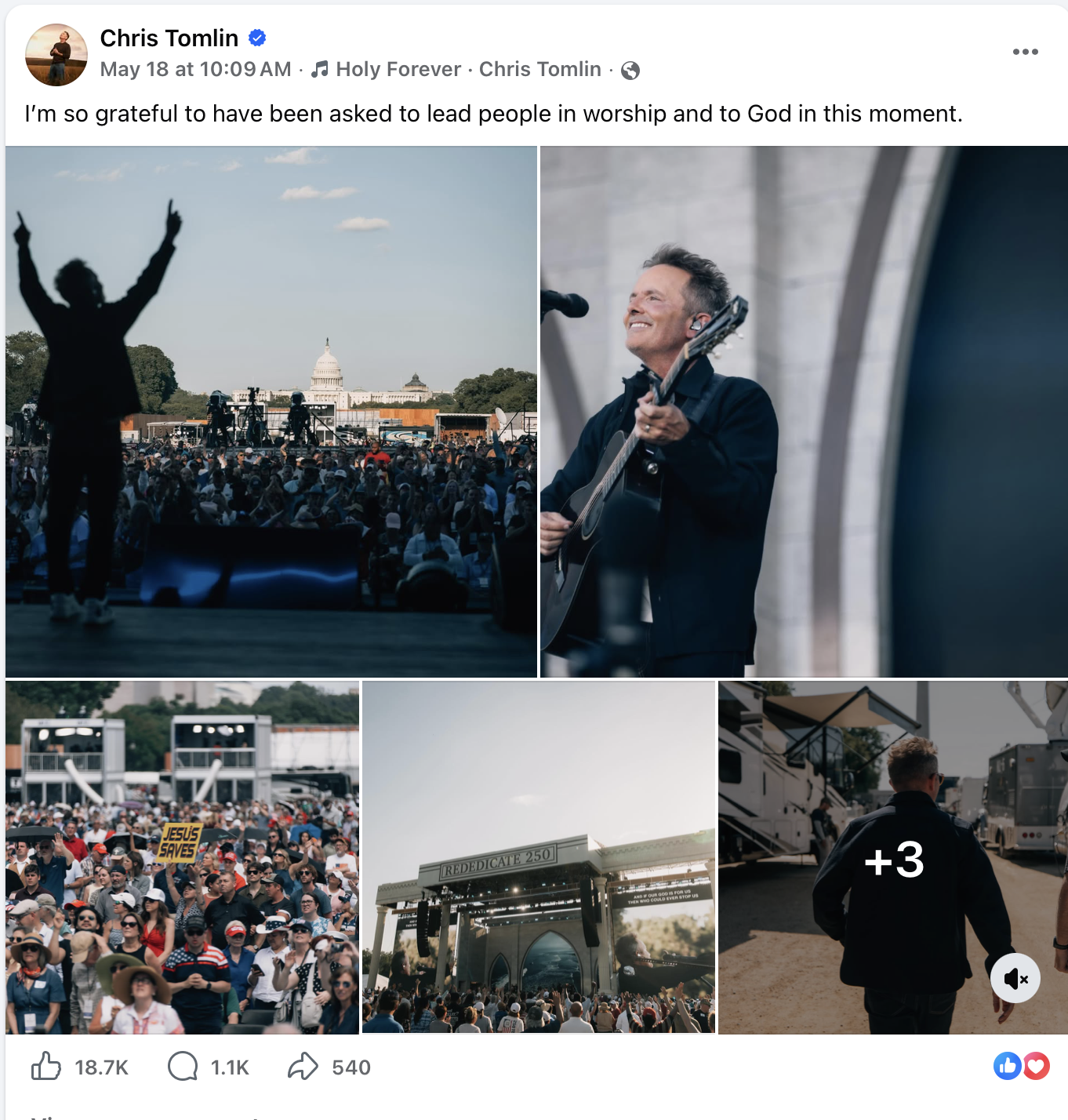
The morning worship indeed felt like an average Sunday morning megachurch service, as worship leaders like Andy Frank and Sadie Robertson led such popular songs as “Revelation Song,” “Way Maker” and “Agnus Dei.” The songs flowed from one into the next, with no interruptions of Scripture readings or liturgies other than emotional, seemingly spontaneous prayers.
Later in the day, the music included more traditional sounds from the U.S. Armed Forces trumpets, the Grand Canyon University Canyon Choral Society, the Hillsdale College Choir, the U.S. Marine Band, and SMSgt Adam Tianello. Liberty University’s LU Praise and Aodhan King also brought more contemporary sounds throughout the day.
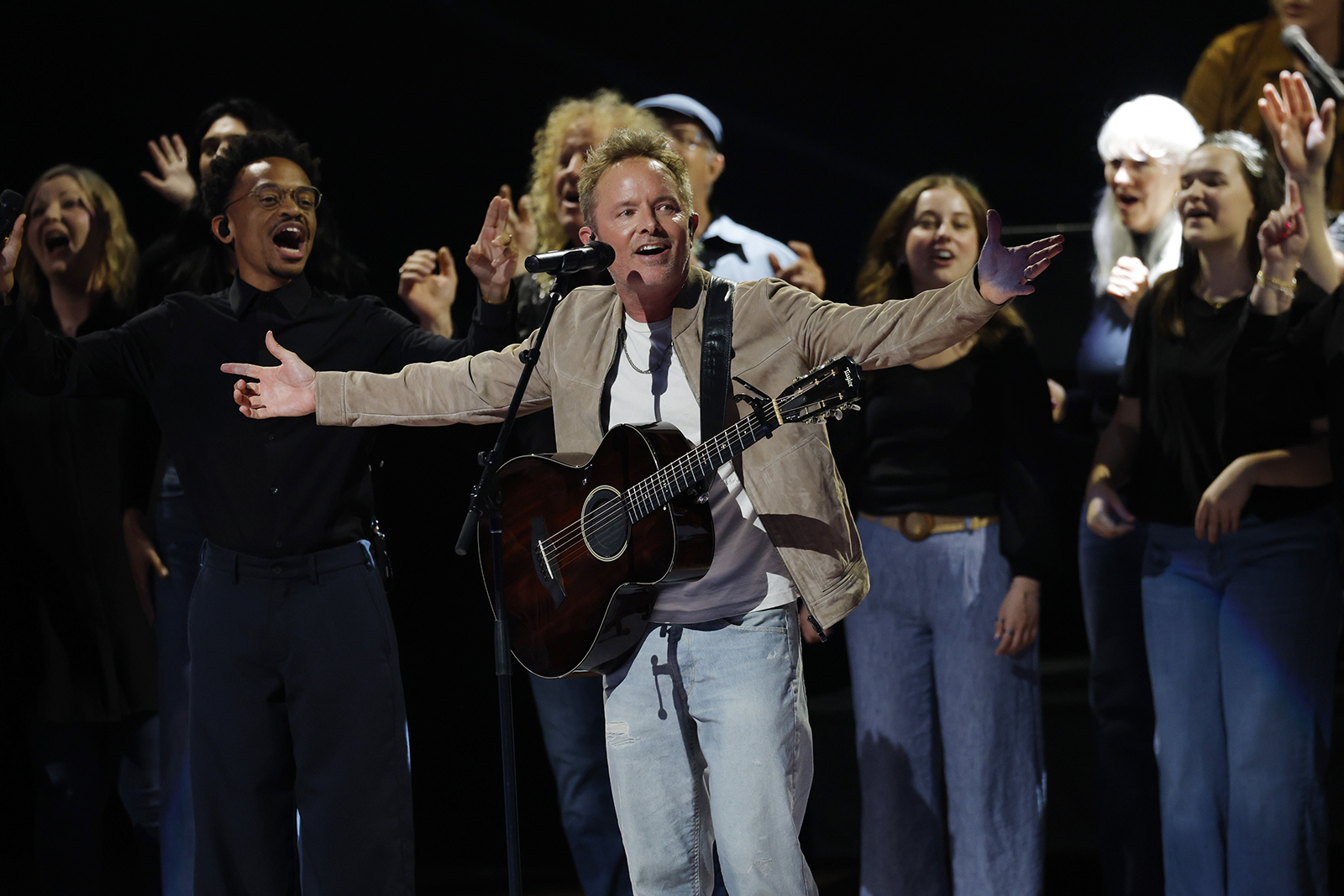
But the headliner who brought the entire gathering to its final crescendo was Chris Tomlin, the superstar worship leader TIME magazine called the “most often sung artist in the world.”
A growing number of people are learning about how Christian supremacist worship leaders like Sean Feucht are wielding worship as a weapon to fight battles against their neighbors at Christian nationalist worship gatherings for the cause of extremist, right-wing politics. And Feucht had plenty of that at the Sylvan Theater in front of the Washington Monument on Saturday night. But many have been surprised at Chris Tomlin’s choice to headline the Trump administration’s Rededicate 250 event on Sunday. And yet, if we take a look back at Tomlin’s history, the signs he embraces Christian nationalism have been there for decades.
Tomlin’s recent embrace of extremist politicians
Tomlin’s appearance wasn’t the first time he’s attached himself over the last year with extremist politicians. He also opened worship at Charlie Kirk’s memorial service last September.
With American flags hanging over the stage, the Turning Point Action logo featured on the screen behind the band, and the piano beginning its intro, Tomlin led worship while Secretary of Defense Pete Hegseth and his top officials entered State Farm Stadium.
“I’m still in the glow of it,” Tomlin confessed days later in an interview. “For Jesus to be proclaimed so boldly throughout the whole day by everyone, basically pointing people, what an awakening moment in our nation. It feels like a shift. It feels like this real awakening that so many people have been praying for.”
In evangelical worship gatherings, the music moves the hearts of the congregation to celebrate and give their lives for the values they’re declaring, while at the same time preparing their hearts for the preacher. So when the sermons at Kirk’s funeral included the likes of President Donald Trump admitting, “I hate my opponent,” and Deputy Chief of Staff Stephen Miller raging about those who oppose the Trump administration, “You have nothing, you are nothing, you are wickedness, you are jealousy, you are envy, you are hatred,” many people wondered why Tomlin would’ve characterized the day with such glowing praise.
 After all, Tomlin isn’t regarded as an extremist. Other than his 2010 endorsement of his high school friend and current U.S. Senator James Lankford, who was running for Oklahoma’s 5th Congressional District at the time, Tomlin doesn’t publicly endorse candidates.
But with Tomlin headlining the Trump administration’s “Rededicate 250” event on the National Mall where the administration rededicated the country to being “one nation under God,” many are rightly beginning to ask why such a mainstream, non-political worship leader like Tomlin would promote a theocracy.
Coming to America
Years before Tomlin would go on to earn more No. 1 hit singles than any other Christian artist ever, sell more than 12 million albums and garner 6.8 billion career global streams, one early catalyst for his career happened on a cool and rainy day in May 2000 on the grassy hills of Shelby Farms in Memphis, Tenn., where 40,000 students gathered for what many have called an evangelical Woodstock.