This article originally appeared at Baptist News Global on July 28, 2026.
Congress has a 9% confidence rating among Americans, according to recent data from Gallup. And yet, it’s more ethical than mainstream evangelicalism’s institution of complementarian marriage.
Discussion about addressing sexual ethics on Capitol Hill has grown over the past few months following the resignations of Rep. Eric Swalwell (D) due to allegations of sexual assault and Rep. Tony Gonzales (R) due to allegations of sexual misconduct involving one of his staffers who later died by suicide.
With congressmen from both parties being accused of abusing women, the efforts to address House ethics have been bipartisan. Teresa Leger Fernandez, chair of the Democratic Women’s Caucus, said, “From the beginning, we’ve pushed to extend the prohibition against members having sexual relationships to ALL staff.”
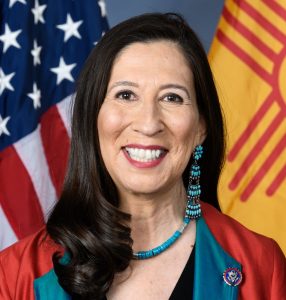
Fernandez said she is working together with the Republican Women’s Caucus “to reform the culture of sexual misconduct on the Hill.”
During a news conference last week, Speaker of the House Mike Johnson voiced his support for the reform.
“I can’t believe it would be acceptable in any situation,” Johnson said regarding members of Congress dating House staffers. “I think we should as a bare minimum in Congress have rules and traditions that are adhered to in corporate America, so that is an easy one for me.”
Power dynamics in workplace hierarchies
The reason businesses discourage or prohibit dating between people on different corporate hierarchy levels is that it creates a power dynamic that puts the person on the underside of the hierarchy at risk.
According to Thrive Law, “Power imbalances, particularly between managers and subordinates, can complicate matters, raising questions of coercion and consent.”
“Power imbalances, particularly between managers and subordinates, can complicate matters, raising questions of coercion and consent.”
This is why current congressional policies prohibit dating between members of Congress and their own staffers. But there haven’t been prohibitions against members of Congress dating other members’ staffers.
While it’s understandable that members of Congress could be attracted to a staff member, there’s still a significant power differential between them, whether they oversee them personally or not. As Fernandez said, “The power dynamic that leads to abuse exists for all staffers, not just those within the members own office.”
Two competing bills
In order to address these power dynamics, two competing bills have been proposed. Rep. Jeff Crank (R) is proposing a resolution that would require any member of Congress who desires to date another lawmaker’s staffer to disclose the relationship to an ethics panel.
But Johnson and Fernandez find themselves in a rare moment of agreement: Disclosure of such relationships wouldn’t remove the inherent power imbalance.

“At the end of the day, there’s a fundamental power dynamic here,” Rep. Alexandria Ocasio-Cortez said when asked about the two competing views. “It should be a pretty simple line to draw.”
When a reporter asked her why it’s taken so long to address these power imbalances, Ocasio-Cortez replied, “Do you know what percentage of Congress is male? It’s about 75.”
Complementarianism’s power imbalance
Despite the differences across the aisle and between these two proposals, the basic principle behind the congressional reform effort is clear: Relationships where one person is in a position of authority over another inherently include a particular vulnerability for the person in the role of subordination.
So why don’t complementarians seem to understand this basic reality?