This article originally appeared at Baptist News Global on May 15, 2026.
What does pluralism mean for people who believe there’s only one way to God, who believe God reigns, but who live in a nation that values liberty and justice for all?
This is the question many Christians are wrestling through. As evangelical Christians gain more power in our government, it’s important to note the range of conclusions they’re coming to.
This is an especially relevant conversation to highlight the Trump administration’s “Rededicate 250” event this weekend on the National Mall, where the federal government plans to “rededicate” the country to being “one nation under God.”
Is pluralism possible under an evangelical Christian God? And if so, in what ways?
Conservative Christian supporters of Trump will point to the fact that the Rededicate 250 event is featuring leaders from a variety of faith backgrounds. For example, headliners include Catholics such Cardinal Timothy Dolan and Bishop Robert Barron, charismatics such as Paula White, Guillermo Mondonaldo and Lou Engle, and Baptists such as Jack Graham, Jonathan Falwell, Robert Jeffress and Jonathan Pokluda. Then there are non-denominational Christians like Franklin Graham.
From one perspective, there is a lot of theological diversity among these speakers. But from a broader perspective, there’s not much diversity at all.
The only non-Christian faith leader who has been announced so far is Rabbi Meir Soloveichik, an Orthodox rabbi who also has contributed to PragerU. There are no Muslims, Buddhists, Hindus or any other religions represented. Nor are there Mainline Christians or moderate to liberal Christians.
“All who are being given the microphone for Rededicate 250 share one thing in common — allegiance to President Donald Trump.”
Despite whatever differences they have from one another, the Catholics, charismatics, Baptists and non-denominational Christians who are being given the microphone for Rededicate 250 all share one thing in common — allegiance to President Donald Trump.
So is the extent of our pluralism limited to Jewish and Christian faith communities who are loyal to Trump? If so, how does that fit into our nation’s claim to value liberty and justice for all?
Religious freedom or Christian supremacist privilege?
According to the First Amendment to the Constitution, “Congress shall make no law respecting an establishment of religion, or prohibiting the free exercise thereof.”
This would seem to make the intentions of our nation’s Founders clear. No particular religion should be established by our government. And no particular religion should be prohibited by our government. In theory, this would mean Christians, Jews, Muslims, Hindus and Buddhists all should feel completely free to worship as their convictions lead them.
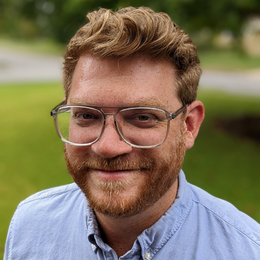
But in the world of Christian supremacy, what seems to be clear becomes quite murky. In his book The Violent Take It By Force: The Christian Movement That Is Threatening Our Democracy, Matthew D. Taylor defines a Christian supremacist as “someone who thinks that Christians should occupy authoritative and privileged positions in culture, politics and other domains of public life. In other words, Christian supremacists believe that Christians — by dint of being Christians — are morally elevated above the rest of humanity and are empowered by God to govern civil society.”
Where, then, are conservative, moderate and progressive Christians on this binary between religious freedom or Christian supremacist privilege? And how do followers of other religions fit into this? It depends on who you ask.